Black Friday week

Black Friday week

📄 Digital book in PDF · read it on your phone or print it

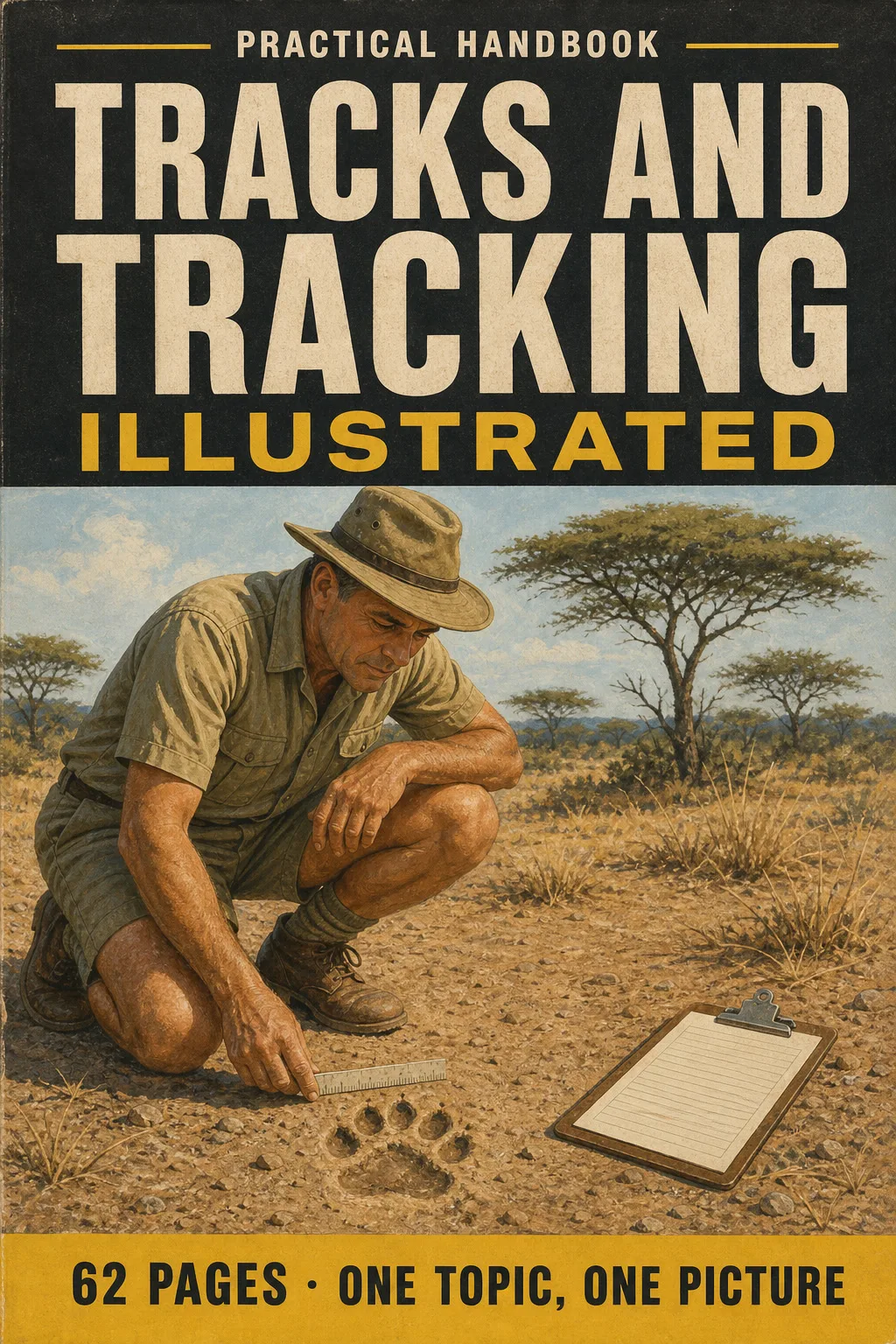
Tracks and Tracking Illustrated: Read Every Track in the Same 5 Steps One Topic on Every Page

Footprints, gaits, cloven hooves, elephant and rhino, cats and hyenas, small carnivores, birds and reptiles, dung and signs, safety on foot. Every topic has its own page: first the drawing, then what you need to remember. 62 illustrated pages.

I WANT THE BOOK + 2 FREE GIFTS

🔒 Secure checkout · PDF by email · 30-day guarantee

Every topic, its own pageEach print and gait drawn, with the explanation alongside
62 illustrated pages10 parts, from the 5-step method to the field checklist
Up-to-date sourcesThe Track and Sign syllabus used in SA guide training and SAQA nature guiding unit standards
PDF by emailFormat

Look Inside the Book

Every page has a big drawing and a box with the measurements and checks you need to know:

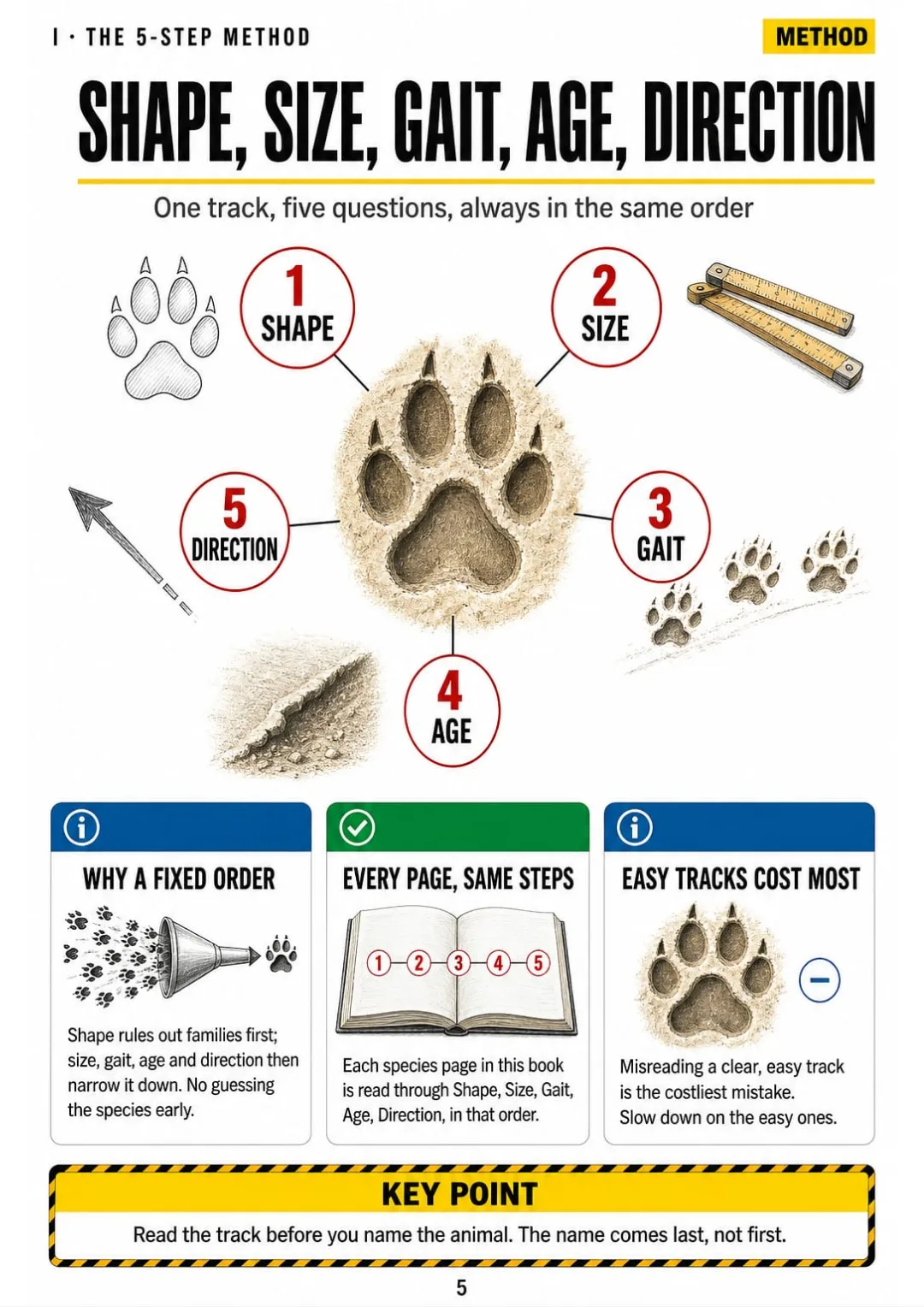
Shape → Size → Gait → Age → Direction: the order used on every page
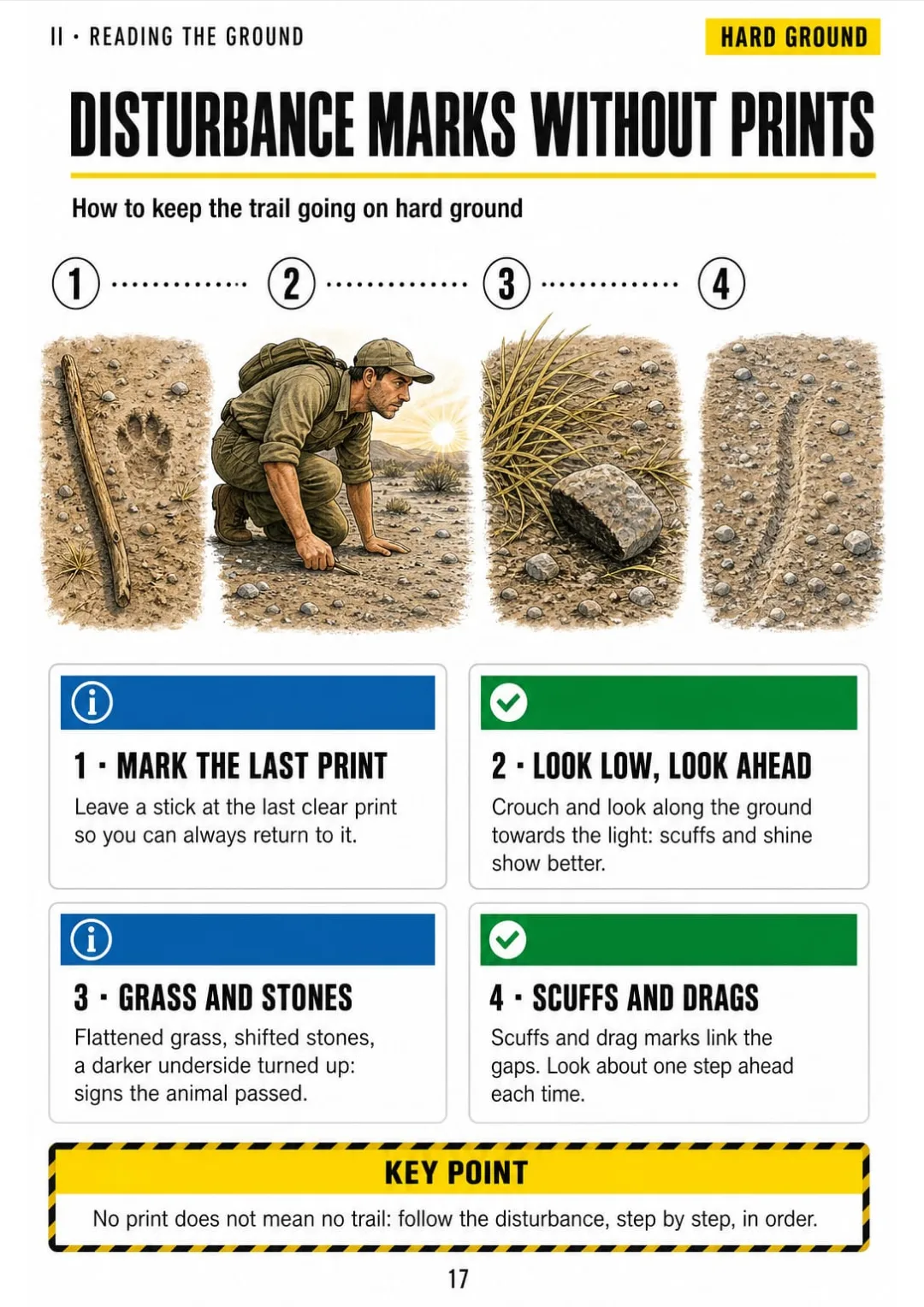
Four steps to follow a trail across hard ground with no clear print
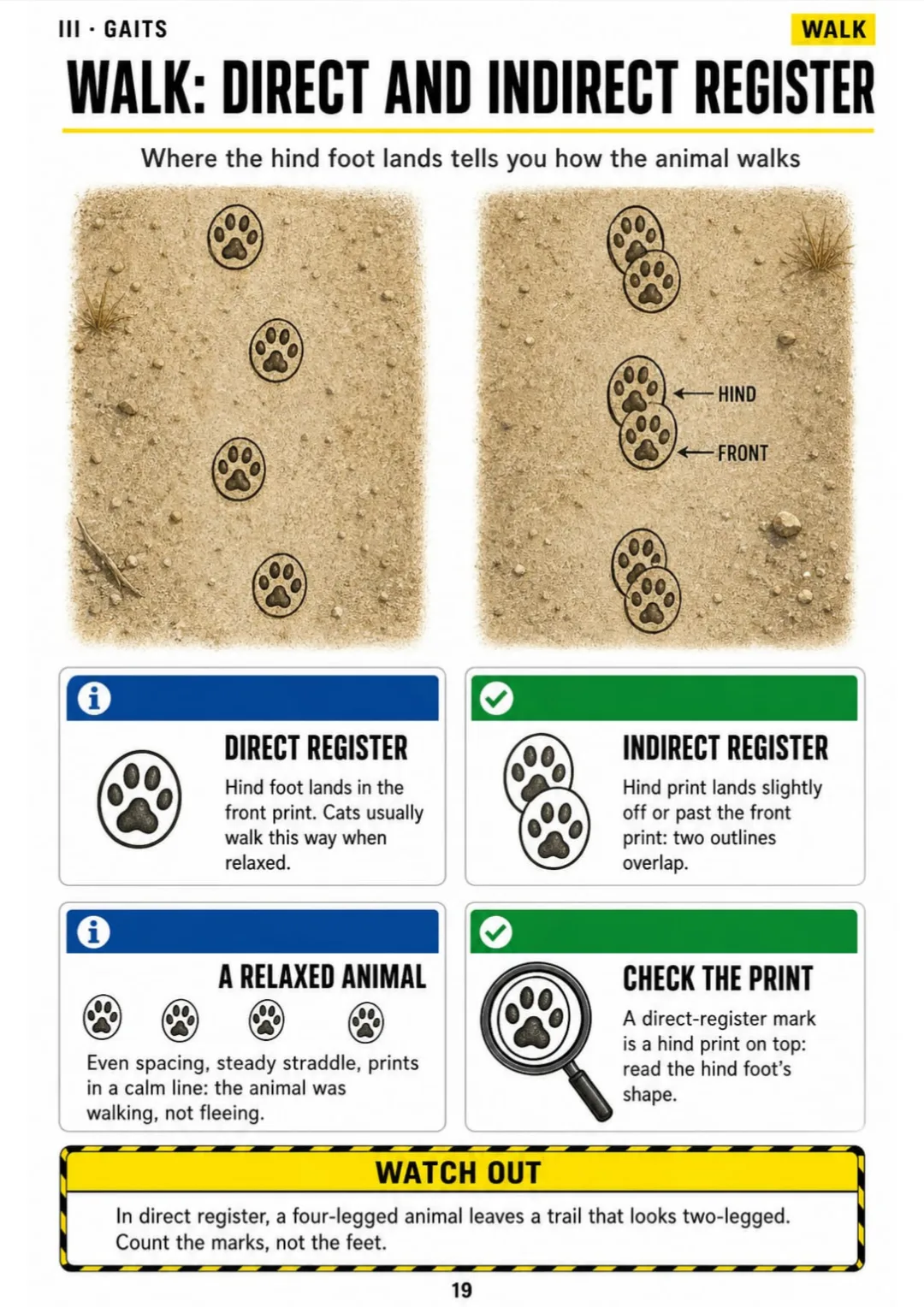
Direct vs indirect register: where the hind foot lands, drawn side by side
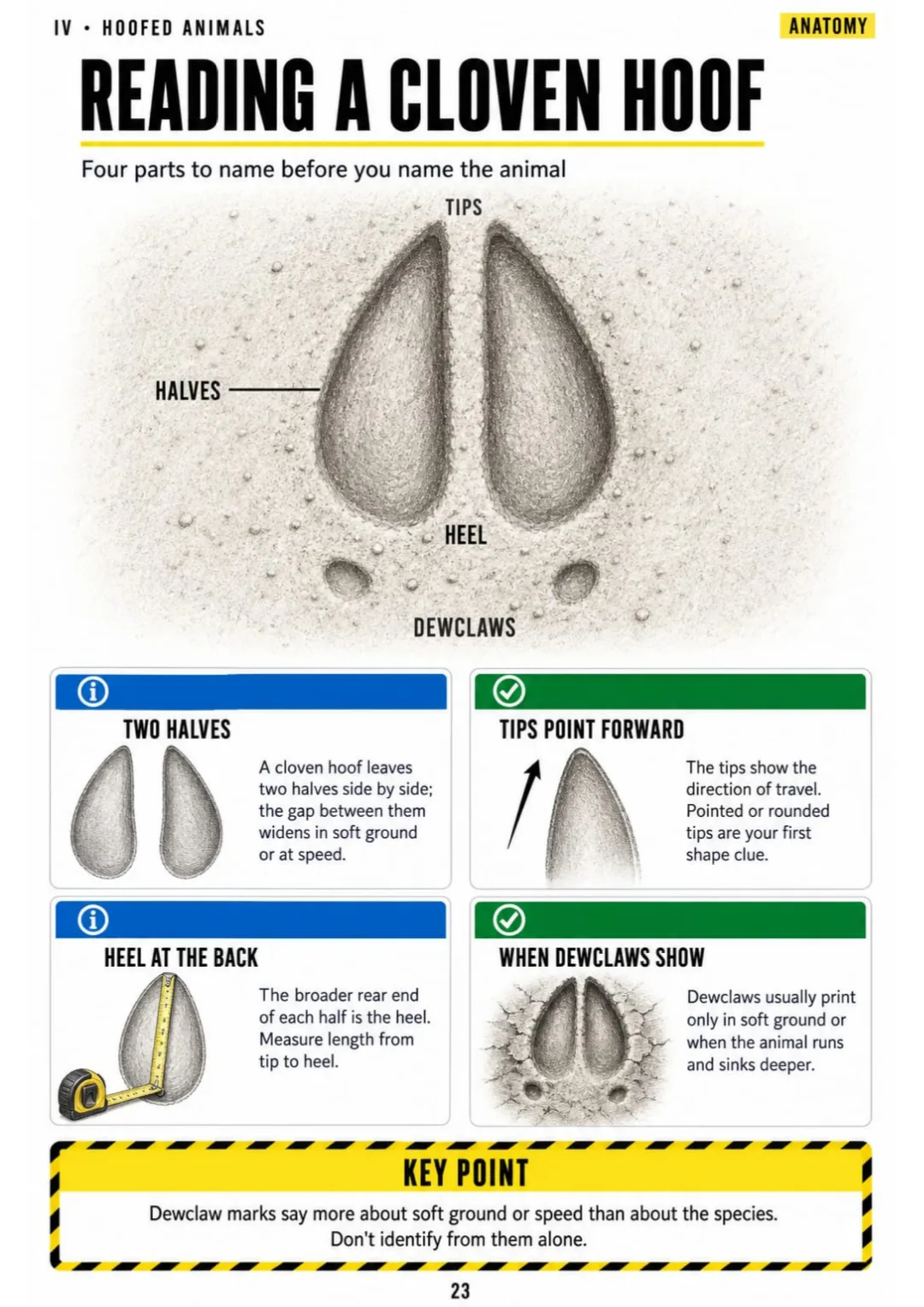
Cloven hoof: two halves, tips, heel, and dewclaws that show in soft ground or at speed
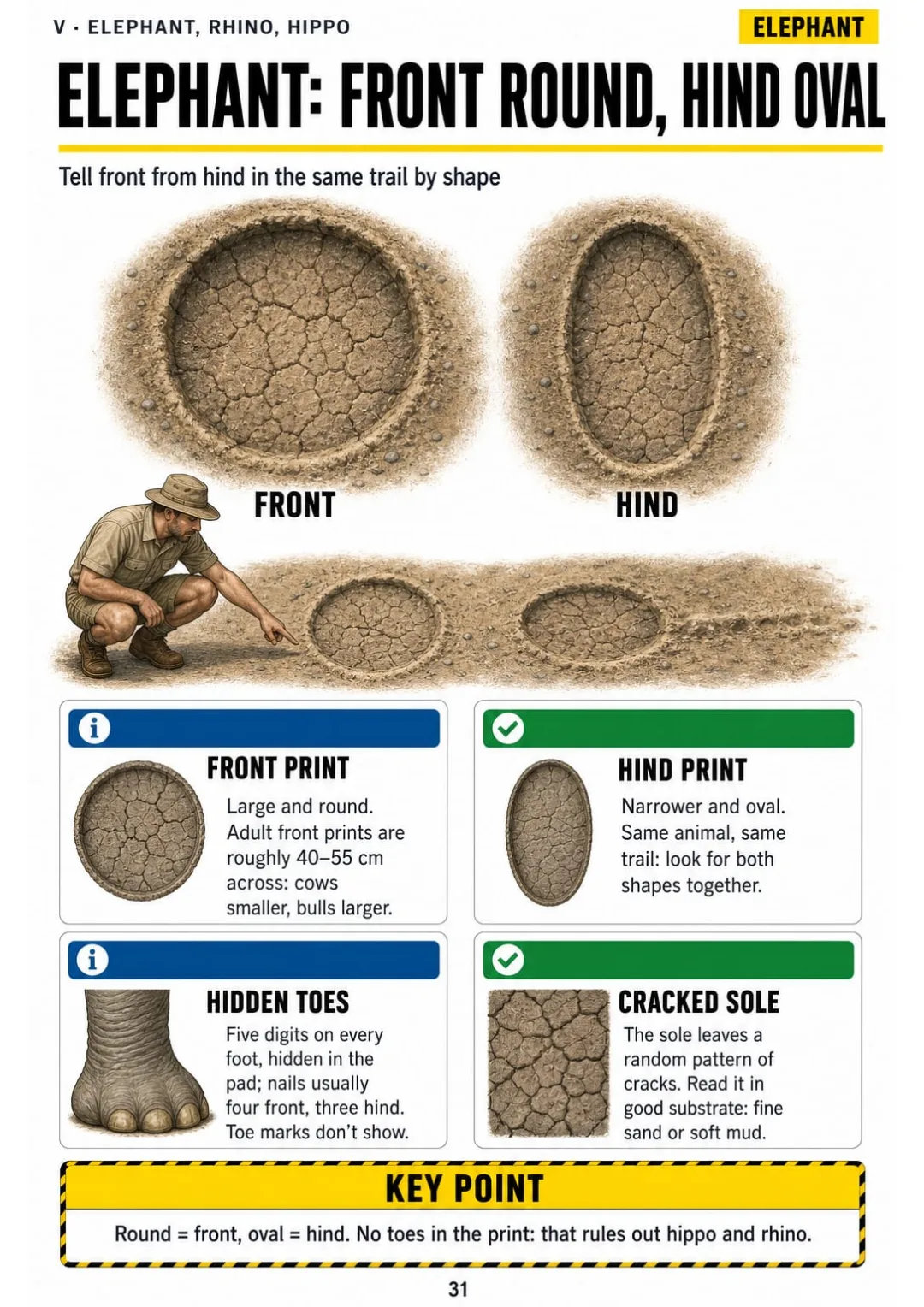
Elephant front prints are round, hind prints oval, toes hidden, sole cracked
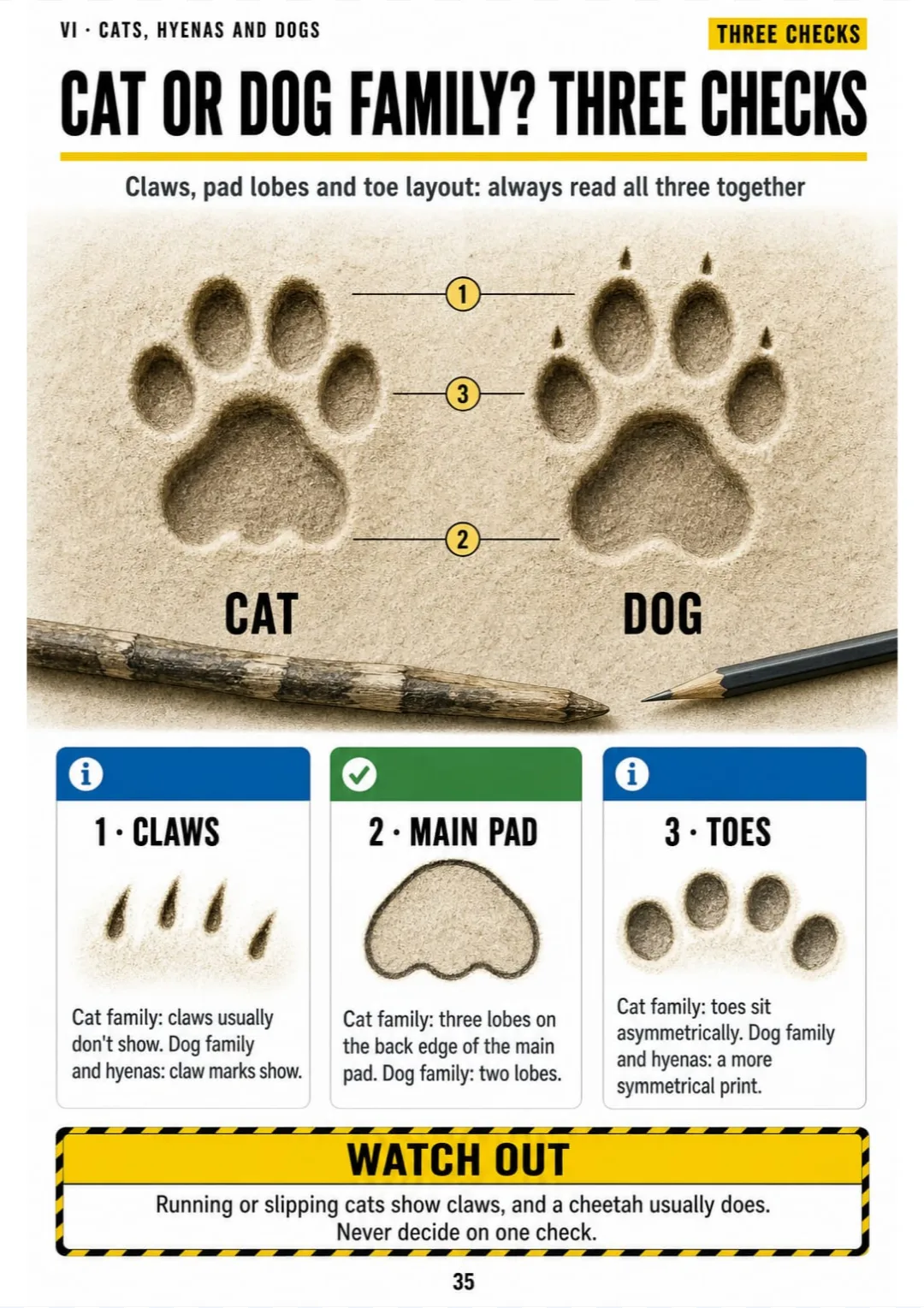
Claws, three or two pad lobes, toe symmetry: the three checks drawn on one print
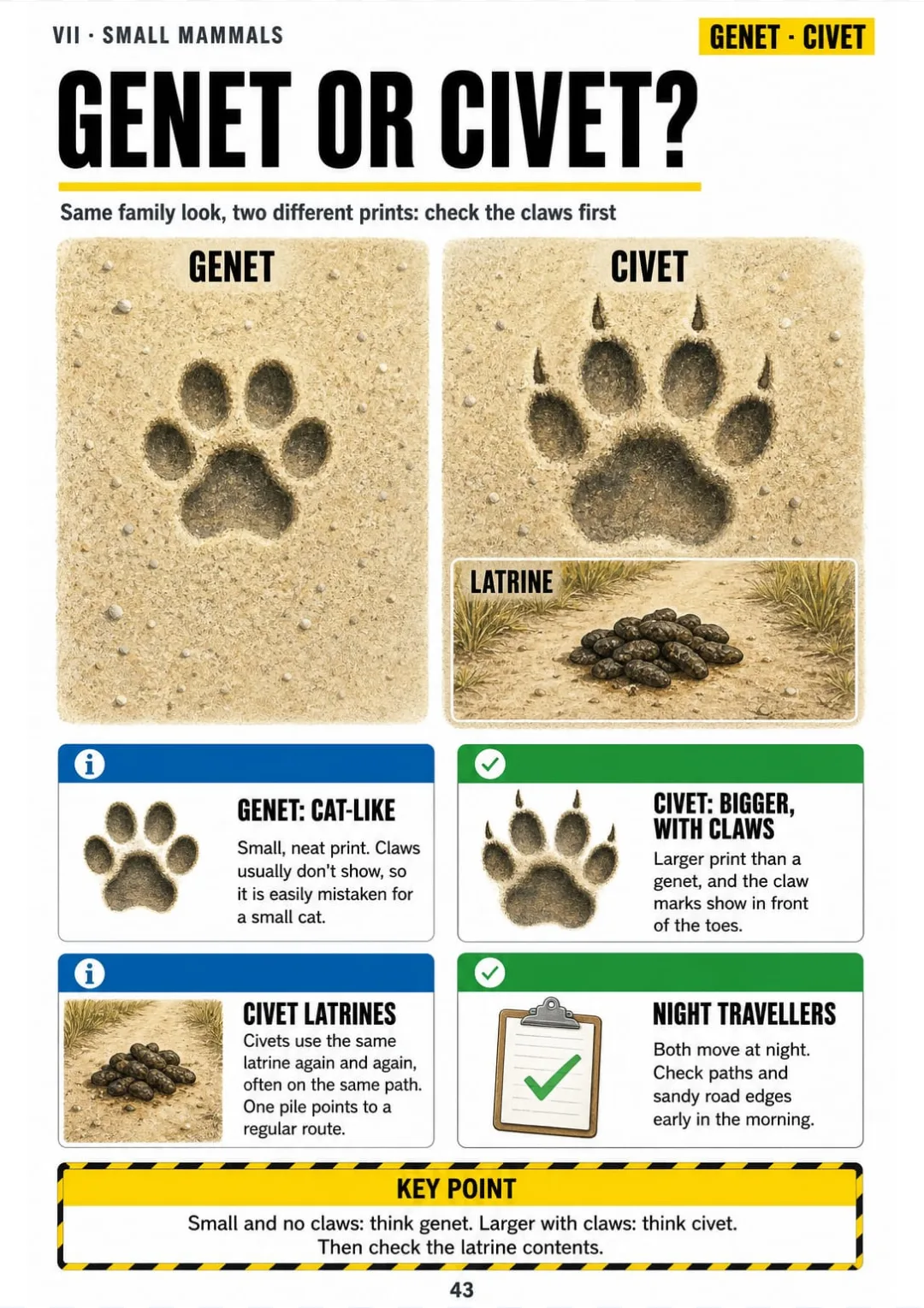
Genet: small cat-like print, no claws. Civet: larger print with claws and reused latrines.
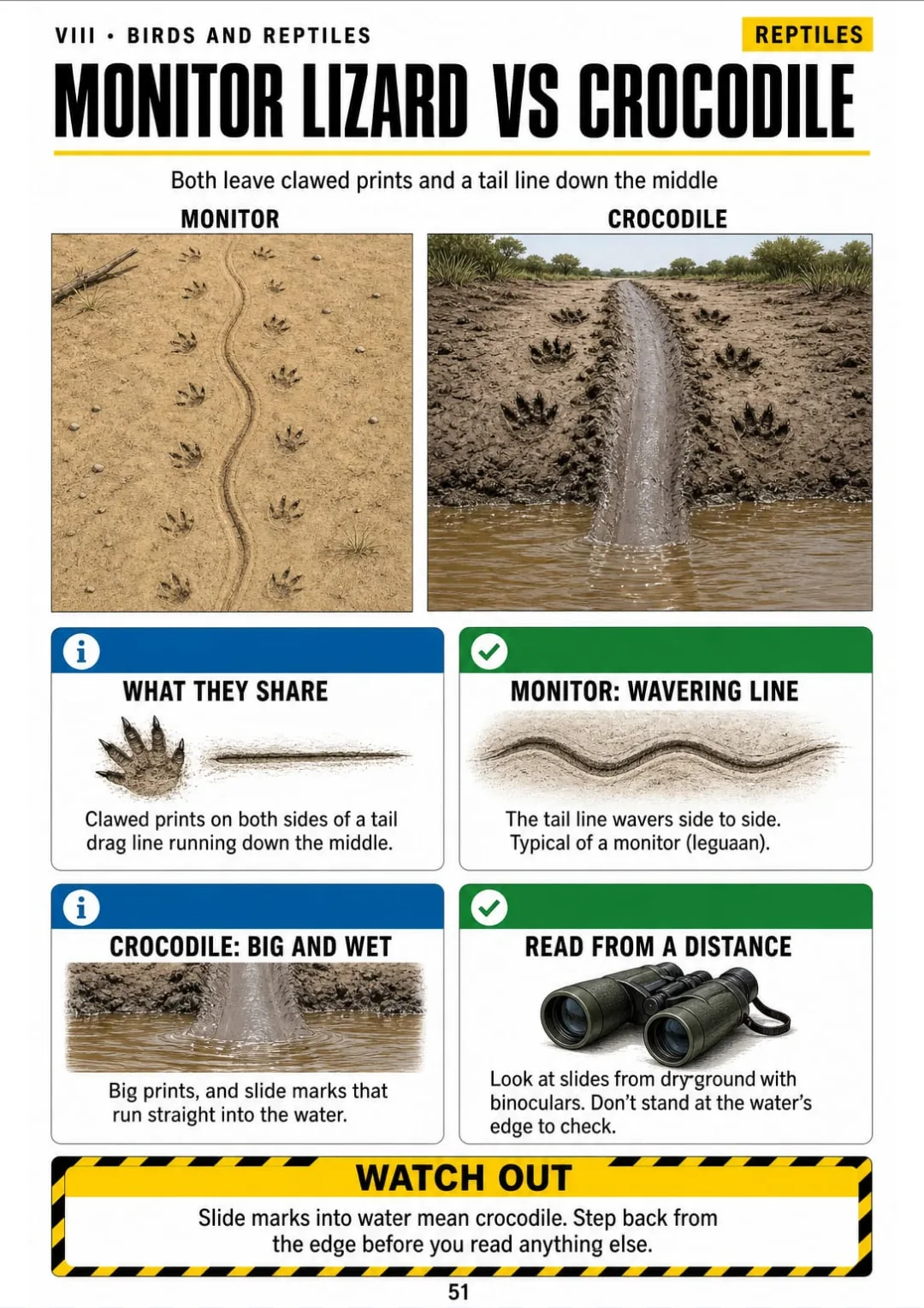
Monitor: a wavering tail line. Crocodile: big clawed prints and slides into the water.

Swipe to see more →

These are real pages from the book. The table of contents is the full one: 10 parts and 58 topics.

The Problem Isn't You. It's How It Was Explained to You.

You're on foot, following a line of prints along a sandy road. Is that one print, or two sitting on top of each other? And which one is the hind foot?

Your tracking manual explains register in a paragraph: the hind foot falls in, near or ahead of the front print. Words don't show you where the hind foot actually lands.

Direct vs indirect register: where the hind foot lands, drawn side by side

In this book, register is one page. Direct and indirect register drawn side by side, front print and hind print each outlined, so you see exactly where one falls on the other.

The rest works the same way: substrate, ageing a track, the cloven hoof, elephant front and hind, cat or dog family. Each one has its own page.

You look at the trail, see the register and call the gait without going back to the book.

COMPARE FOR YOURSELF

The Same Topic, Two Ways to Study It

THIS
  • The tracking manual: lines and lines of text
  • Substrates described only in words
  • You reach the trail with doubts
The appearance of a track is determined to a considerable degree by the nature of the substrate on which it is deposited. In fine, dry sand the margins of the impression tend to collapse inwards, obscuring detail and enlarging apparent dimensions, whereas in moist mud the outline is retained with greater fidelity, although slippage may distort the toe impressions. Compacted clay frequently records only partial impressions, and leaf litter may preserve no discernible print, requiring the observer to rely upon disturbance and compression of the material.
FOR THIS
  • One print drawn on four substrates
  • The key differences in a box
  • You see it and you get it
Four steps to follow a trail across hard ground with no clear print
CONTENTS

Take a Look at the 10 Parts and 58 Topics

The 5-step method, reading the ground, gaits, hoofed animals, elephant, rhino and hippo, cats, hyenas and dogs, small carnivores, birds and reptiles, dung, signs and safety, and a field checklist: 62 pages, all illustrated

IThe 5-Step Method · pp. 5-11
  1. Shape, Size, Gait, Age, Direction
  2. Anatomy of a Print
  3. Step 1: Shape First, Species Later
  4. Step 2: Measuring in Centimetres
  5. Front Foot or Hind Foot?
  6. Step 3: Stride and Straddle
  7. Steps 4 and 5: Age and Direction in One Look
IIReading the Ground · pp. 12-18
  1. Substrate Changes Everything
  2. Ageing: Crisp Edges vs Crumbled Edges
  3. Wind, Dew and Rain as Clocks
  4. Overlaid Tracks Tell Time
  5. Direction of Travel
  6. Disturbance Marks Without Prints
  7. Speed From the Ground
IIIGaits Drawn as Sequences · pp. 19-22
  1. Walk: Direct and Indirect Register
  2. Trot, Lope and Gallop
  3. Bounding and Hopping
  4. Pronking and Stotting
IVHoofed Animals · pp. 23-30
  1. Reading a Cloven Hoof
  2. Kudu vs Impala
  3. Small Antelope: Duiker, Steenbok, Klipspringer
  4. Wildebeest, Tsessebe and Waterbuck
  5. Buffalo vs Cattle
  6. Giraffe
  7. Warthog vs Bushpig
  8. Zebra: The Single Hoof
VElephant, Rhino and Hippo · pp. 31-34
  1. Elephant: Front Round, Hind Oval
  2. Elephant Size From One Print
  3. White Rhino vs Black Rhino
  4. Hippo: Four Toes
VICats, Hyenas and Dogs · pp. 35-42
  1. Cat or Dog Family? The Three Checks
  2. Leopard vs Spotted Hyena
  3. Lion
  4. Cheetah: The Cat That Shows Claws
  5. Caracal, Serval and African Wildcat
  6. Brown Hyena vs Spotted Hyena
  7. African Wild Dog: Four Front Toes
  8. Black-backed Jackal vs Domestic Dog
VIISmall Carnivores and Other Mammals · pp. 43-48
  1. Genets and Civets
  2. Mongooses
  3. Honey Badger
  4. Porcupine and Aardvark
  5. Baboon and Vervet Monkey
  6. Hares, Springhares and Rodents
VIIIBirds and Reptiles · pp. 49-53
  1. Ostrich: Two Toes
  2. Ground Birds: Guineafowl, Francolin, Secretarybird
  3. Monitor Lizards and Crocodiles
  4. Snake Trails
  5. Tortoises and Insects
IXDung, Signs and Safety on Foot · pp. 54-59
  1. Dung: Shape, Size, Content
  2. Rhino Middens: White vs Black
  3. Feeding Signs
  4. Territorial Signs
  5. Following a Trail
  6. Fresh Sign of Dangerous Game
XReview and Field Checklist · pp. 60-62
  1. Look-alike Pairs on One Page
  2. Common Mistakes When Reading Tracks
  3. The 5-Step Field Checklist

One Page, One Topic, All Clear

Think of it this way:

You're on a morning walk and find a big round print in the sand, no toes showing. Is it fresh, and which way is it heading?

You open the elephant page: front print round, hind print oval, the cracked sole drawn in. Two pages on, crisp or crumbled edges tell you how fresh it is, and the scuffed front edge shows the way it went.

Elephant front prints are round, hind prints oval, toes hidden, sole cracked

The same goes for the cloven hoof, leopard vs spotted hyena, white rhino vs black rhino, dung and middens, snake trails: each one on its own page.

Tracks and Tracking Illustrated is 10 parts and 58 topics, all drawn, ending with look-alike pairs, the most common mistakes and a 5-step field checklist.

What you see drawn, you don't have to memorize.

What's Inside Tracks and Tracking Illustrated:

Ipp. 5-11

The 5-Step Method

The order used on every page: shape, size, gait, age and direction, the anatomy of a print, measuring in centimetres, front or hind foot, stride and straddle.

IIpp. 12-18

Reading the Ground

How sand, mud, clay and leaf litter change a print, crisp vs crumbled edges, wind, dew and rain as clocks, overlaid tracks, direction and speed.

IIIpp. 19-22

Gaits Drawn as Sequences

Walk with direct and indirect register, trot, lope and gallop, bounding and hopping, pronking and stotting, drawn as sequences of prints.

IVpp. 23-30

Hoofed Animals

The cloven hoof, kudu vs impala, duiker, steenbok and klipspringer, wildebeest, tsessebe and waterbuck, buffalo vs cattle, giraffe, warthog vs bushpig, zebra.

Vpp. 31-34

Elephant, Rhino and Hippo

Elephant front and hind prints, estimating size from one print, white rhino vs black rhino and the four toes of the hippo.

VIpp. 35-42

Cats, Hyenas and Dogs

The three checks for a cat-type or dog-type print, leopard vs spotted hyena, lion, cheetah, caracal, serval and wildcat, brown vs spotted hyena, wild dog, jackal vs domestic dog.

VIIpp. 43-48

Small Carnivores and Other Mammals

Genets and civets, mongooses, honey badger, porcupine and aardvark, baboon and vervet monkey, hares, springhares and rodents.

VIIIpp. 49-53

Birds and Reptiles

The two-toed ostrich print, guineafowl, francolin and secretarybird, monitor lizards and crocodiles, snake trails, tortoises and insects.

IXpp. 54-59

Dung, Signs and Safety on Foot

Dung by shape, size and content, white and black rhino middens, feeding and territorial signs, following a trail and fresh sign of dangerous game on foot.

Xpp. 60-62

Review and Field Checklist

Look-alike pairs on one page, the most common mistakes when reading tracks and the 5-step field checklist.

At the end of the book: Look-alike pairs on one page, the most common mistakes and a 5-step field checklist.
Plus: 2 Free Books

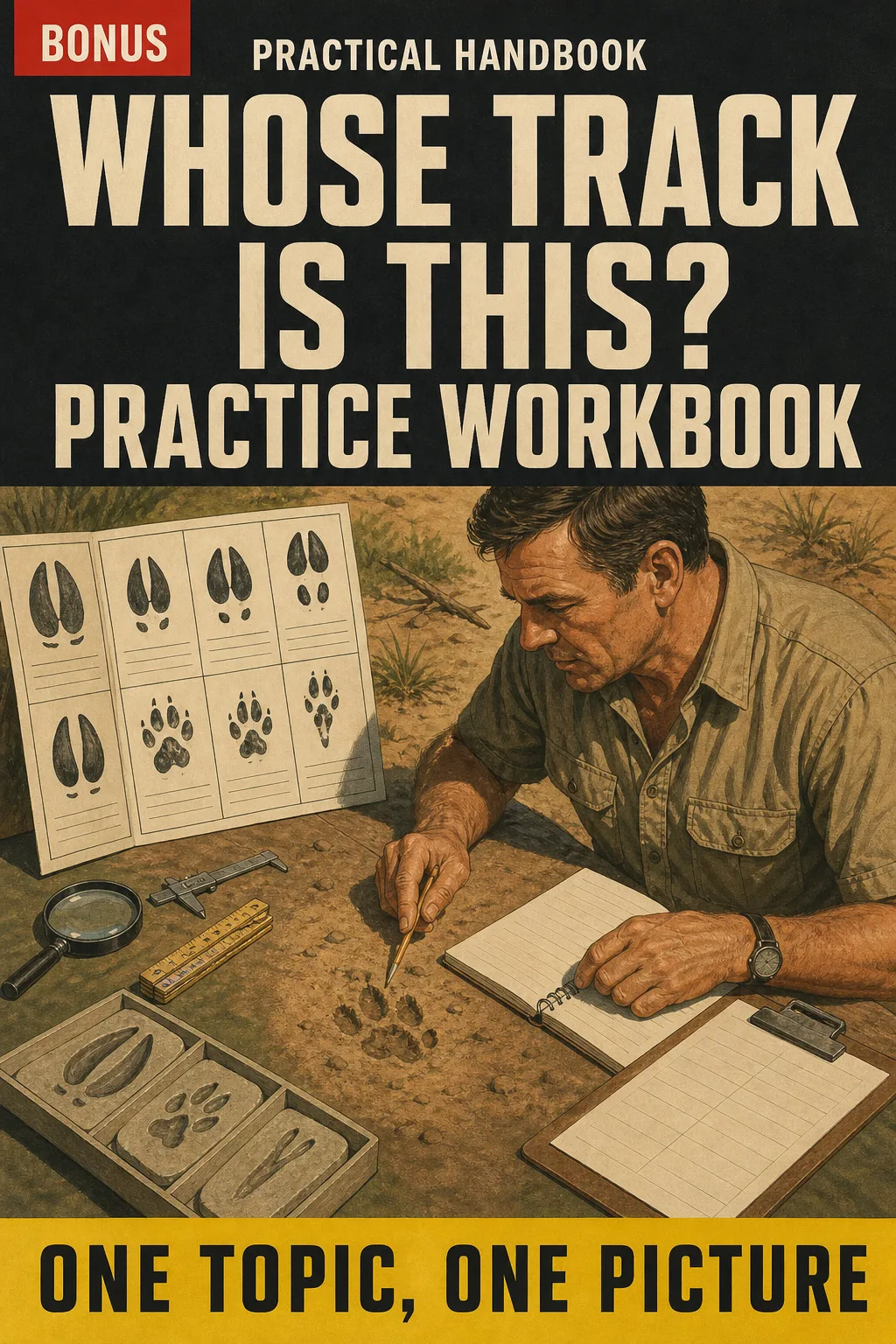
Whose Track Is This? Practice Workbook

BONUS 1: «Whose Track Is This? Practice Workbook»

Value on its own: US$ 17.90

Drawn prints and trails to identify, measure and age on your own, with the answers at the back, so you practise the method before you're out on the ground.

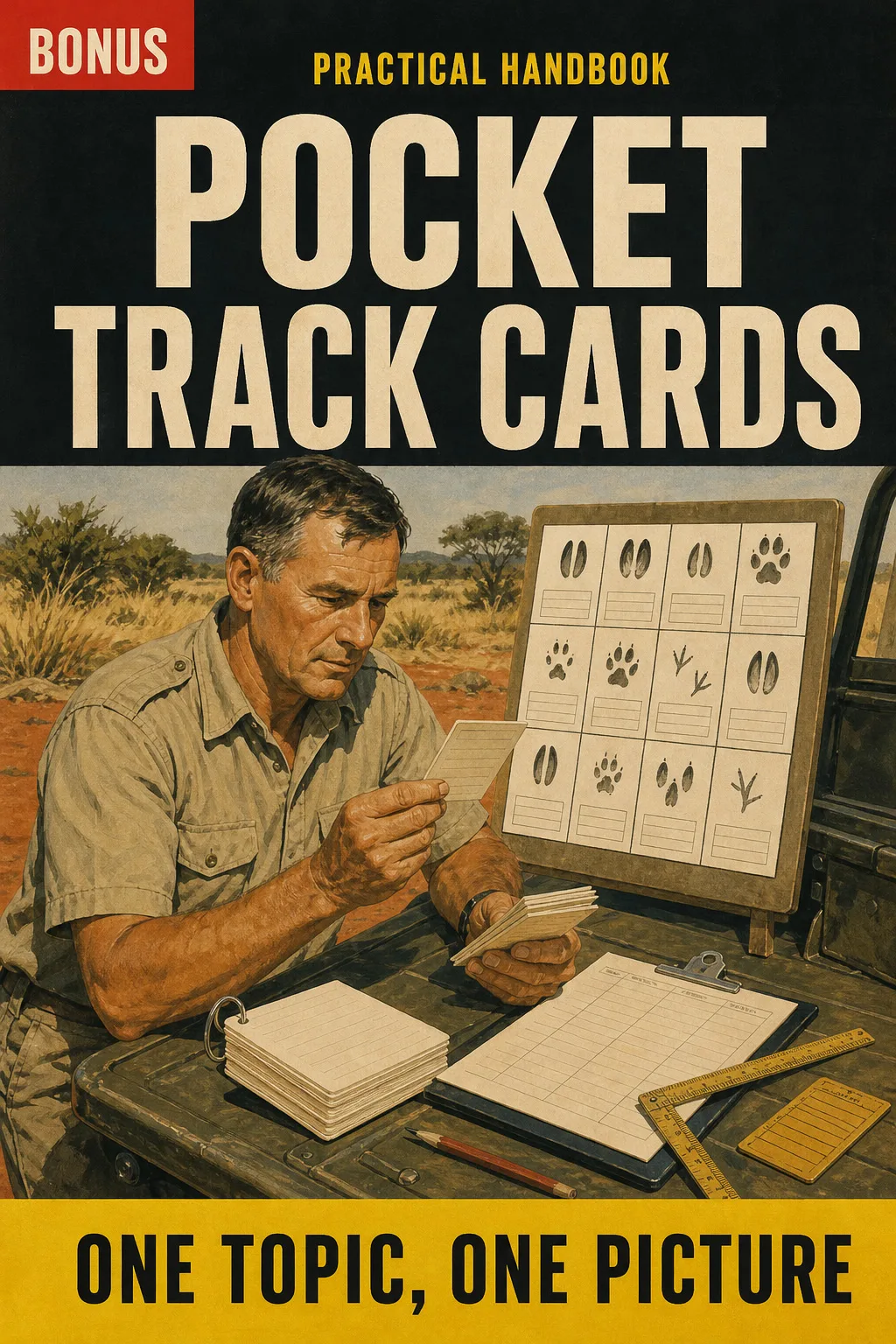
Pocket Track Cards

BONUS 2: «Pocket Track Cards»

Value on its own: US$ 14.90

The key prints, gaits and look-alike pairs on printable cards to keep in your pocket or vehicle and check at a glance.

Black Friday week · ends 30 Nov

Tracks and Tracking Illustrated with 2 Free Books

  • Tracks and Tracking Illustrated: 62 illustrated pagesUS$ 63
  • BONUS 1: Whose Track Is This? Practice WorkbookUS$ 17.90
  • BONUS 2: Pocket Track CardsUS$ 14.90
  • High-resolution PDF to printIncluded
Total value US$ 95.80
BLACK FRIDAY PRICE:
US$ 27
You save US$ 68.80
YES, I WANT TRACKS AND TRACKING ILLUSTRATED FOR US$ 27

📄 This is a digital PDF book sent to your email: nothing is printed or shipped.

Secure purchaseEncrypted payment30-day guarantee

PDF by email: We email you Tracks and Tracking Illustrated as a PDF, together with the two free books. It's a single payment: no installments, no extra charges.

Who This Book Is For

Your tracking assessment is coming up

Your tracking assessment is coming up

Every topic in the same 5-step order, from register to the cloven hoof, so in the last weeks you revise one page at a time instead of flicking through photos.

You're out on foot with guests

You're out on foot with guests

The look-alike pairs and the three checks on one page, so when a guest points at a print you know what to look at first and can explain why.

You spend weekends in the bush

You spend weekends in the bush

The prints, gaits and signs you see on the road, drawn in centimetres, so you stop guessing and start reading what walked past.

Everything You Get Today

US$ 95.80US$ 27
YES, I WANT TRACKS AND TRACKING ILLUSTRATED FOR US$ 27

📄 This is a digital PDF book sent to your email: nothing is printed or shipped.

30DAYS
GUARANTEE

30-Day Guarantee

Try Tracks and Tracking Illustrated for 30 days, bonus books included.

We refund everything if the file won't open, if the book isn't what you see here, if you were charged twice or if the email doesn't arrive. Just email us.

You pay once. No subscriptions.

Frequently Asked Questions

Is it for me if I already know the basics?

Yes. It isn't a beginner's picture book: it puts what you already see on the ground into one fixed order (shape, size, gait, age, direction) and places look-alike prints side by side, with measurements in centimetres.

Where does the content come from?

It was checked against the Track and Sign and Field Guide syllabus used in South African guide training (FGASA) and the CATHSSETA-registered nature guiding unit standards on SAQA, so you can use it to revise before a track and sign evaluation. The species, gaits and substrates are southern African. We name these bodies only to show what the book covers.

Is it official material?

No. It's an independent illustrated book. It isn't affiliated with, approved by or endorsed by any association, SETA or training provider, and it doesn't give you a certificate, a qualification or any credits.

Does it replace a course or time with an experienced tracker?

No. It's study and revision material. Tracking is learnt on the ground, and on foot near dangerous game the guide in charge always decides.

Are the workbook exercises the ones from an assessment?

No. The prints and trails in the workbook were drawn for this book. They aren't questions from any official assessment.

When and how do I get it?

As a PDF by email, at the address you enter at checkout.

Do I have to pay every month?

No. It's a one-off payment. No subscription.

Can I have it on paper?

Yes. The PDF is ready to print, so you can keep the pages or the Pocket Track Cards in the vehicle or your pack.

How does the refund work?

You have 30 days. We refund everything if the file won't open, if the book isn't what you see on this page, if you were charged twice or if the email doesn't arrive: just email us.

Before You Close This Page

No more rereading without anything sticking.

Cat-type or dog-type print: the three checks are drawn on one page.

You walk the trail knowing where everything is.

Drawings make studying faster.

The book is right below.

One-time payment: US$ 27 · Guarantee: 30 days · PDF by email

YES, I WANT TRACKS AND TRACKING ILLUSTRATED FOR US$ 27

📄 This is a digital PDF book sent to your email: nothing is printed or shipped.